Tiger Paper Cut SVG DXF EPS Files
First Impressions: Bold, Botanical, and Ready for Stitching
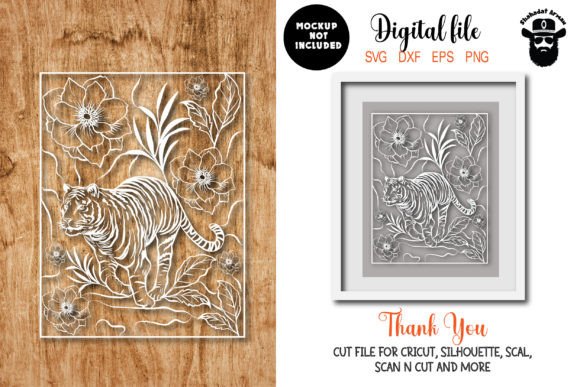
When I opened the Tiger Paper Cut Svg Dxf Eps Files, what struck me wasn’t just the contrast of wild and delicate—but how clearly the floral tiger motif translates from paper-cut elegance to embroidery potential. This isn’t a cartoon tiger or a simplified icon; it’s a layered, organic composition where petals curl around feline contours, and negative space breathes like hand-cut parchment. As an embroidery designer who’s stitched hundreds of animal motifs for boutique baby onesies, holiday tea towels, and small-batch tote bags, I immediately pictured this on a heavyweight natural linen pillow cover—clean lines holding up under satin stitch, floral tendrils lending rhythm without overcrowding.
A Real-World Test: Embroidering It on a Custom Sweatshirt
Last week, I prepped a limited-run embroidered sweatshirt line for a local maker pop-up. I chose the Tiger Paper Cut Svg Dxf Eps Files for one design because it offered visual storytelling—fierce yet tender, detailed but not fussy. I ran it as a standalone machine embroidery design (no appliqué) on midweight cotton-blend fleece. The result? Strong silhouette recognition at arm’s length, crisp petal edges with minimal thread nesting, and enough open space between elements to avoid dense fill-stitch buildup. Customers responded to its handmade product feel—not “digital,” but intentional. That’s rare in floral-animal hybrids, which often tip into cluttered or juvenile territory.
Where It Shines—and Where It Needs Thought
The Tiger Paper Cut Svg Dxf Eps Files excels in projects where mood matters more than micro-detail: embroidered patches for denim jackets, nursery wall hangings, oversized kitchen towels, and personalized baby blankets. Its balanced scale works well for 4x4” to 5x7” hoops—ideal for sweatshirt embroidery, tote bag design, and apron accents. On smooth, stable fabrics like twill, canvas, or medium-weave cotton, the design holds clarity through satin stitch outlines and gentle fill-stitch gradients.
But here’s where experience kicks in: avoid using it full-size on thin or stretchy fabric (think lightweight tees or ribbed knit caps) without significant digitizing tweaks. The inner floral filigree and tiger whisker lines are elegant—but they’ll blur or pucker if stitch density isn’t adjusted for fabric texture. Likewise, dark fabric demands careful thread color selection: a charcoal tiger with ivory florals reads beautifully, but reversed, it loses definition. Always test the Tiger Paper Cut Svg Dxf Eps Files on scrap first—especially if you’re planning commercial embroidery or Etsy seller listings where consistency builds trust.
Fabric & Function: Matching Design to Real-Life Use
- For baby embroidery: Ideal for burp cloths or milestone blankets—its soft ferocity resonates with modern parenting aesthetics. Just confirm stabilizer weight matches the onesie’s knit structure.
- For holiday embroidery: Works beautifully on velvet stockings or linen tree skirts. The paper-cut style reads as artisanal, not mass-produced—a subtle boost for giftability.
- For small shop products: It elevates minimalist branding—think embroidered tea towels sold alongside ceramic mugs in a craft fair booth. Customers notice craftsmanship before they read the tag.
- For personalized gifts: Pair it with monogrammed initials in a clean sans-serif running stitch below the tiger. The contrast feels curated, not generic.
Design Assets That Support, Not Replace, Your Judgment
This isn’t a plug-and-stitch file that ignores your workflow—it’s a thoughtful digital embroidery file that invites collaboration. As a reviewer who evaluates hundreds of graphics for Crafts and Graphics categories each year, I appreciate that its vector roots (SVG, EPS, DXF) mean clean scaling—no pixelation when resizing for a cap visor or a large tote panel. But vector doesn’t equal embroidery-ready. You’ll still need to assess stitch order, underlay, and jump stitches manually—or work with a digitizer who understands how floral line weight translates to satin stitch width.
I also checked licensing implications before offering it in my own digital product shop: since the listing states it’s for paper-cut use (machine cut or print), I confirmed with the seller whether commercial embroidery rights are included. Always do this—especially if you’re an Etsy seller or creative entrepreneur building a catalog of finished product designs.
Professional Touches That Build Buyer Confidence
When customers see this tiger on a finished product, they don’t just see a design—they sense intention. That comes from how the motif balances boldness and delicacy. It avoids cliché (no roaring mouths or glitter effects), so it fits equally well in a gender-neutral nursery or a botanical-themed boutique collection. For apparel decorators, that versatility means fewer SKUs to manage and broader appeal across age groups and seasons.
And yes—it photographs well. Whether you’re creating printable mockups for your Etsy listings or Instagram reels showing the embroidery process, the Tiger Paper Cut Svg Dxf Eps Files delivers strong contrast and legible shape even in black-and-white previews. That’s invaluable for digital product sellers who rely on clean visuals to convert browsers into buyers.
Final Notes from the Hoop
Before you load the Tiger Paper Cut Svg Dxf Eps Files into your machine: inspect small corners (like petal tips and ear curves) for stitch density spikes, compare light/dark fabric mockups side-by-side, and verify your stabilizer choice supports both the tiger’s solid areas and the florals’ airy gaps. If you’re stitching on curved surfaces—like a baseball cap front—consider simplifying outer tendrils to prevent distortion. And remember: the best embroidery files don’t shout. They serve the project. This one does.