Vector SVG Ukrainian Ornament
A Designer’s First Glance: Grace, Rhythm, and Cultural Warmth
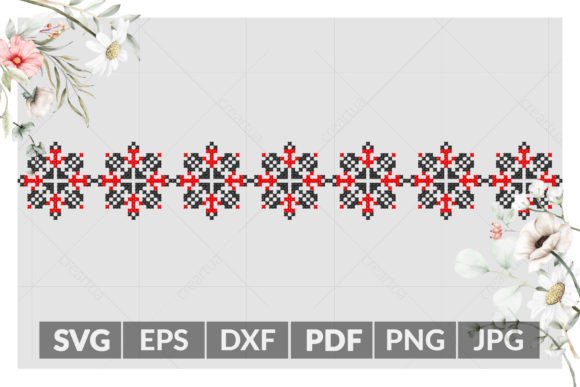
Opening Vector SVG Ukrainian Ornament feels like unfolding a hand-stitched linen napkin passed down through generations—immediately familiar, quietly dignified. The motif balances bold symmetry with delicate flourishes: interwoven bands, stylized wheat stalks, and rhythmic geometric repeats that echo traditional pysanky and Hutsul textile patterns. It doesn’t shout; it invites. As a designer who’s stitched everything from boutique baby blankets to limited-run festival patches, I immediately sensed its versatility—not as a standalone statement, but as a grounding element. It reads equally well at 3 inches on a child’s bib or scaled up to 8 inches across a linen tea towel. That balance is rare—and valuable.
Where It Shines in Real Projects
Last week, I prepped a custom embroidered tote bag for a local herbalist—a gift for her shop’s fifth anniversary. She wanted something “rooted, gentle, and unmistakably handmade.” Vector SVG Ukrainian Ornament landed perfectly as the central motif on the front pocket. Its clean vector lines translated crisply into a 4.5-inch machine embroidery design, with generous spacing between elements. No crowding. No stitch overlap. Just confident, breathable ornamentation that let the natural texture of the canvas breathe underneath.
I’ve also tested it on sweatshirt embroidery for a small craft business client: digitized at medium density, it held structure without stiffness—even on midweight French terry. On baby embroidery? Ideal for a crib mobile or onesie yoke—its rounded corners and absence of ultra-fine linework mean no skipped stitches or thread breakage on delicate cotton interlock. For holiday embroidery or wedding gifts, it adds quiet sophistication to pillow covers and kitchen towels—never kitschy, never generic. And as an Etsy seller myself, I appreciate how cleanly it renders in printable mockups: no pixelation, no jagged edges, just authentic visual weight.
Where to Proceed Thoughtfully
This isn’t a one-size-fits-all embroidery file. Its strength lies in intentionality—not convenience. On curved surfaces like caps or structured hats, test placement first: the outermost motifs may distort slightly if forced too tightly into a small hoop size. On stretchy fabric (think lightweight knits), use cutaway stabilizer—not tear-away—to prevent puckering in the fill stitch zones. And while the design avoids micro-detail, those inner floral centers still demand attention: if stitching on dark fabric, confirm your thread colors offer enough contrast—especially for subtle tonal variations in the running stitch accents.
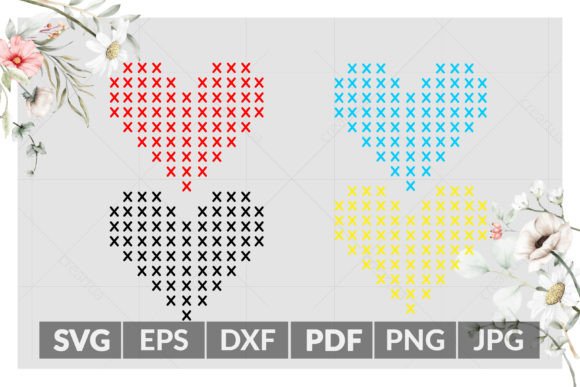
It’s not ideal for dense, layered garments (like quilted jackets) unless simplified first—some inner repeats can feel visually heavy when stacked over batting or fleece. Likewise, avoid shrinking it below 2.5 inches for finished products: the rhythm blurs, and the handmade product loses its signature clarity. And though it’s labeled a cross-stitch embroidery ornament, remember—it’s a vector SVG, not a pre-digitized embroidery file. You’ll need to convert it properly for your machine, adjusting stitch density and underlay based on fabric texture and desired drape.
What It Adds to Your Craft Business—and What It Doesn’t
Vector SVG Ukrainian Ornament elevates perceived value instantly. Customers notice craftsmanship—not just decoration. When used on personalized gifts or small shop products, it signals care, cultural respect, and design fluency. It strengthens brand consistency for makers who lean into heritage, botanical, or slow-craft aesthetics. But it won’t “sell itself.” Its power comes from context: paired with thoughtful typography, quality materials, and intentional placement. Used carelessly—say, slapped onto a low-grade polyester tote without testing thread color contrast—it can look flat or disconnected.
For commercial embroidery projects, it builds trust. Clients see that you’re choosing meaningful, well-structured design assets—not chasing trends. And for digital product sellers, it’s a strong anchor in a Graphics collection: versatile enough for print-on-demand, scalable for sublimation, and distinctive enough to stand out in crowded Etsy listings.
Practical Notes Every Embroidery Designer Should Keep Handy
- Always test on scrap fabric first—especially when switching between light/dark backgrounds or fabric types.
- Review stitch density before finalizing: high density works on stable fabrics like denim or linen; reduce for knits or sheer cotton.
- Confirm hoop size compatibility early—some versions of this motif span wider than expected at larger scales.
- Inspect small details in black-and-white mockups to assess legibility before committing to thread colors.
- Use proper stabilizer: medium-weight cutaway for most apparel; tear-away for stable home-decor fabrics.
- Check licensing terms before selling finished items or bundling it into digital embroidery kits—this is essential for Etsy sellers and craft fair vendors.
- Compare how it reads on textured vs. smooth fabric: the ornament’s elegance deepens on linen or unbleached cotton but softens on brushed fleece.
Final Thought: A Design That Earns Its Place
Vector SVG Ukrainian Ornament isn’t flashy—but it’s reliable, resonant, and quietly professional. In a landscape full of over-digitized, trend-chasing graphics, it stands apart by honoring tradition without leaning on cliché. Whether you’re building a craft business, curating boutique branding, or stitching a heartfelt personalized gift, it rewards attention. Use it deliberately. Respect its roots. And let its rhythm guide your next embroidery project—not as filler, but as foundation.