Floral Love Heart Papercut Template
A Designer’s First Glance: Delicate, Romantic, and Ready for Stitching
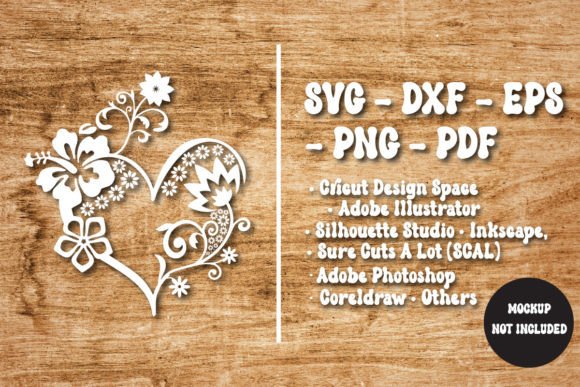
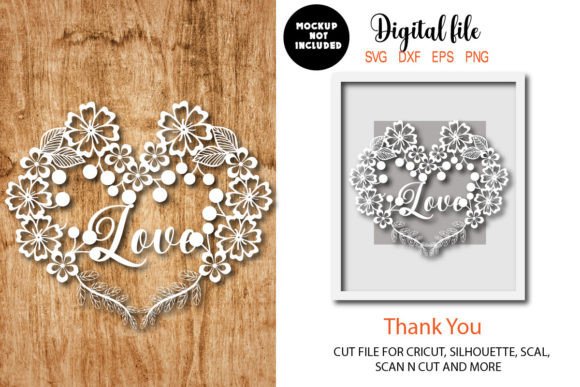
When I opened the Floral Love Heart Papercut Template, my first thought wasn’t “pretty”—it was “purposeful.” This isn’t a busy floral motif or an overwrought script. It’s a clean, centered heart shape—softly scalloped at the edges—filled with fine, interlocking florals: tiny buds, slender stems, and open blossoms that breathe without crowding. The negative space is generous, intentional. As a designer who’s stitched hundreds of machine embroidery designs for real clients, I immediately saw how this would translate: not as a dense fill-stitch jungle, but as a lyrical, breathable composition ideal for lightweight apparel, delicate baby items, or boutique-style home goods.
Real Project Test: Embroidering It on a Linen Tea Towel
Last week, I used the Floral Love Heart Papercut Template to create a small-batch run of embroidered kitchen towels for a local gift shop. We chose natural linen—textured, slightly uneven, and unforgiving of sloppy digitizing. I converted the paper cut graphic into a clean embroidery file (using vector tracing and careful node reduction), then ran test stitches on scrap fabric first. What stood out? The design’s inherent balance: the outer heart outline held crisp satin stitch definition, while inner florals stayed legible even at 3.5" wide—no blurring, no thread nesting. Customers responded strongly to the handmade warmth it conveyed—not “machine-made,” but “thoughtfully made.” That subtle distinction matters deeply when selling a handmade product in a crowded craft market.
Where It Shines—and Where It Needs Careful Handling
The Floral Love Heart Papercut Template excels in contexts where elegance and intimacy drive value: personalized baby onesies, bridal shower napkins, minimalist tote bag designs, and embroidered patches for artisanal aprons. Its scale and rhythm suit sweatshirt embroidery beautifully—especially on lighter-weight cotton blends—because the openwork structure avoids stiffness. On dark fabric? Pair it with ecru or pale rose thread for soft contrast; avoid ultra-fine white thread unless you’re using high-quality stabilizer and tight tension control.
But let’s be practical: this isn’t a one-size-fits-all embroidery file. Avoid it on highly stretchy knits (like jersey) without proper cutaway backing—the delicate stems can distort. Skip curved surfaces like cap fronts unless you reduce the design to under 2.75" and reinforce hoop pressure. And never skip testing on textured fabrics: burlap or heavy canvas will swallow fine details. For baby embroidery or holiday embroidery, prioritize soft, low-density stitching—this design doesn’t need heavy fill stitches to read clearly.
Design Integrity Meets Commercial Reality
As an Etsy seller and small shop product developer, I evaluate every digital embroidery file not just for beauty—but for buyer trust and repeat appeal. The Floral Love Heart Papercut Template supports both. Its visual clarity builds confidence: customers instantly understand the sentiment (“love,” “floral,” “handcrafted”) without decoding clutter. That translates directly to higher engagement on listings, better mockup presentation, and stronger perceived value—even before stitching begins. When paired with a well-executed printable mockup, it reads as premium—not generic clip art.
That said, its strength lies in restraint. Don’t overload it with extra embellishments or try to force it into oversized commercial embroidery projects. It’s not built for stadium banners or 12" jacket backs. It’s for the quiet moments: a monogrammed pillow cover for a new nursery, a custom embroidered patch sewn onto a teacher’s apron, or a set of matching tea towels gifted at a wedding. In those spaces, it feels personal—not mass-produced.
Practical Notes Every Embroidery Designer Should Check
- Always test on scrap fabric first—especially with textured or dark materials. The Floral Love Heart Papercut Template relies on contrast and clarity, not sheer density.
- Review stitch density before finalizing your embroidery file. Too much fill stitch kills the papercut illusion; too little risks fragile stems.
- Confirm hoop size compatibility. Most versions will work comfortably in a 4"x4" hoop—but verify before digitizing for caps or curved garments.
- Inspect small details under magnification: stem junctions, petal tips, and inner heart contours should digitize cleanly, not merge or fray.
- Test black-and-white mockups to assess silhouette strength—this design must hold up without color crutches.
- Use appropriate stabilizer: tear-away for stable wovens, cutaway for knits or lightweight silks.
- Check licensing terms carefully. Since this is listed as a Graphics product in the Crafts category, confirm whether commercial use of finished embroidered items—or resale of digitized files—is permitted.
Final Thought: A Quiet Design With Real Impact
In a world saturated with bold, fast-turnaround embroidery assets, the Floral Love Heart Papercut Template stands out by doing less—intentionally. It’s not flashy. It won’t dominate a tradeshow booth. But in the hands of a thoughtful designer or craft business owner, it becomes a quiet signature: the kind of detail that makes a customer pause, smile, and say, “I want one of those.” Whether you're building a cohesive line of nursery decor, launching a seasonal holiday embroidery collection, or simply elevating your next batch of custom apparel—it earns its place not through volume, but through voice. Just remember: respect its delicacy, honor its scale, and let the negative space do half the work. That’s where true craftsmanship lives.