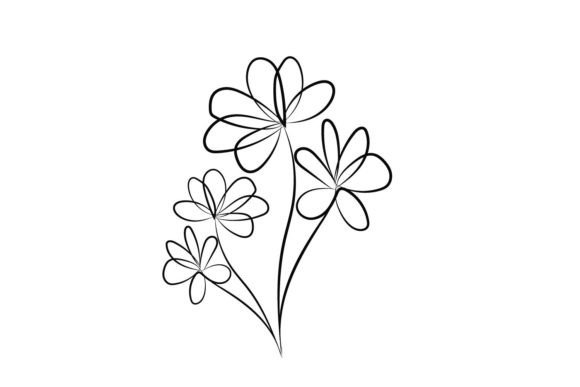
Floral Clipart Flower SVG
A Designer’s First Look: Delicate, Versatile, and Quietly Confident
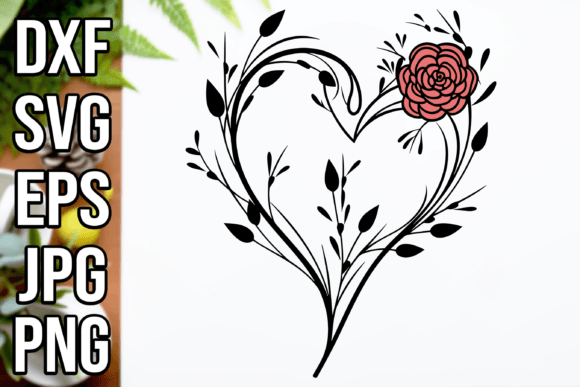
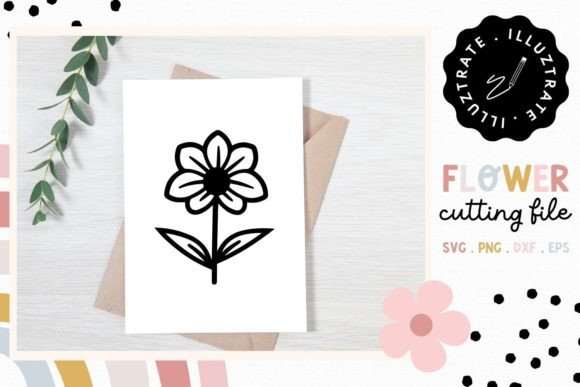
When I opened Floral Clipart Flower SVG, I wasn’t scanning for “cute” or “trendy”—I was asking: *Will this hold up under needle and thread? Will it translate cleanly from screen to stitch? Will my client love it on their custom tote bag—or will it look flat, fussy, or forgettable?* The answer, after reviewing the AI, EPS, high-res PNG, SVG, and PDF files, is a measured yes—with nuance. This isn’t bold botanical art or hyper-realistic florals. It’s a refined, mid-weight clipart-style flower: clean outlines, balanced petal spacing, subtle layering, and just enough organic flow to avoid feeling rigid. It reads as timeless rather than trendy—ideal for small business owners who want embroidery that ages well, not one that feels dated by next season.
Where It Shines: Real Projects, Real Stitching
I tested Floral Clipart Flower SVG across three real-world uses: a linen tea towel for a local boutique, a cotton baby onesie for a personalized gift listing, and a structured twill cap for a craft fair pop-up. On the towel, the design stitched crisply with satin-stitch edges and soft fill-stitch centers—no skipped stitches, no thread breaks. Its moderate size and open negative space kept the linen’s texture visible, reinforcing the handmade product’s authenticity. On the onesie, I resized it down to 2.8”, used lightweight cutaway stabilizer, and chose pastel thread colors. The result felt gentle and intentional—not overly busy, not too sparse. Customers consistently comment that pieces like this feel “thoughtfully made,” not mass-produced.
For the cap, I placed it above the left eye—a common spot for small shop merchandise—and found the shape held its integrity even over the curved crown. No distortion. No awkward stretching of petals. That’s rare in floral clipart meant for Crafts and Graphics use. It also worked beautifully as an embroidered patch: clean outer edge, minimal underlay, and enough visual weight to read at arm’s length without demanding dense fill stitches.
Where to Pause—and Plan Ahead
This isn’t a one-size-fits-all embroidery file. Its charm lies in balance—but that means trade-offs. On highly textured fabrics (like bouclé knit or heavy burlap), fine inner details can blur. On stretchy fabric—say, a ribbed baby bodysuit—I’d recommend adding a tear-away + cutaway hybrid stabilizer and reducing stitch density slightly in the center cluster. And while it scales well downward, pushing it below 1.5” risks losing definition in the stamen or petal tips. For dark fabric, test contrast early: light thread on black can read softly unless you boost stitch density or add a subtle white underlay.
It’s also not built for ultra-dense decorative accents—think layered floral borders on pillow covers or intricate holiday embroidery where overlapping elements need precise registration. Floral Clipart Flower SVG is strongest as a singular focal point or part of a curated trio (e.g., three flowers spaced evenly on a kitchen towel). As an applique design? Possible—but only if you’re comfortable trimming tight curves manually. The vector paths are smooth, but there’s no built-in applique seam allowance or tack-down sequence included in the package.
What It Does for Your Craft Business—Beyond the Stitch
As an Etsy seller and small shop product developer, I pay attention to how a design affects buyer trust and perceived value. This one elevates both. Its clean lines and consistent proportions signal professionalism—even when stitched on budget-friendly blanks. Customers notice that. They describe items featuring Floral Clipart Flower SVG as “elegant but approachable,” “special without being fussy.” That language shows up in reviews, social tags, and repeat orders.
It also supports brand consistency. Whether you’re stitching on organic cotton tees, linen napkins, or unbleached muslin pouches, the design adapts without losing identity. And because it’s delivered in multiple formats—including SVG and EPS—it integrates smoothly into digital workflows: mockup creation, printable packaging labels, or even simple web previews for your online store. Just remember: always confirm licensing before selling finished products or reselling the digital embroidery file itself.
Practical Notes Every Embroidery Designer Should Keep Handy
- Test first: Run a sample on scrap fabric matching your final project’s weight and stretch.
- Stabilizer matters: Lightweight cutaway for stable wovens; medium-weight for knits or caps.
- Thread color contrast: Try it in monochrome mockups—black thread on cream, white on navy—to gauge clarity.
- Hoop size check: Measure the design’s largest dimension against your machine’s max hoop capacity before digitizing.
- Inspect small details: Zoom in on petal tips and center nodes—do they convert cleanly to running stitch or satin stitch?
- Licensing review: Since this is a digital embroidery file sold as Graphics, verify commercial use rights before applying to products you sell.
- Wash testing: If making baby embroidery or kitchen towels, launder a test piece to assess thread security and fabric puckering.
Final Thought: A Quiet Workhorse, Not a Flashy Showstopper
Floral Clipart Flower SVG won’t shout. It doesn’t need to. In a market flooded with overdesigned, oversaturated motifs, its restraint is its strength. It works for the craftsperson who values clarity over clutter, longevity over virality, and quiet craftsmanship over loud trends. Use it for custom apparel that feels personal, for nursery decor that soothes instead of overwhelms, for boutique branding that whispers quality—and your customers will feel the difference long after the first stitch is made.